26 October 2026
Escarpment vs ridge: why wind flow speeds up differently
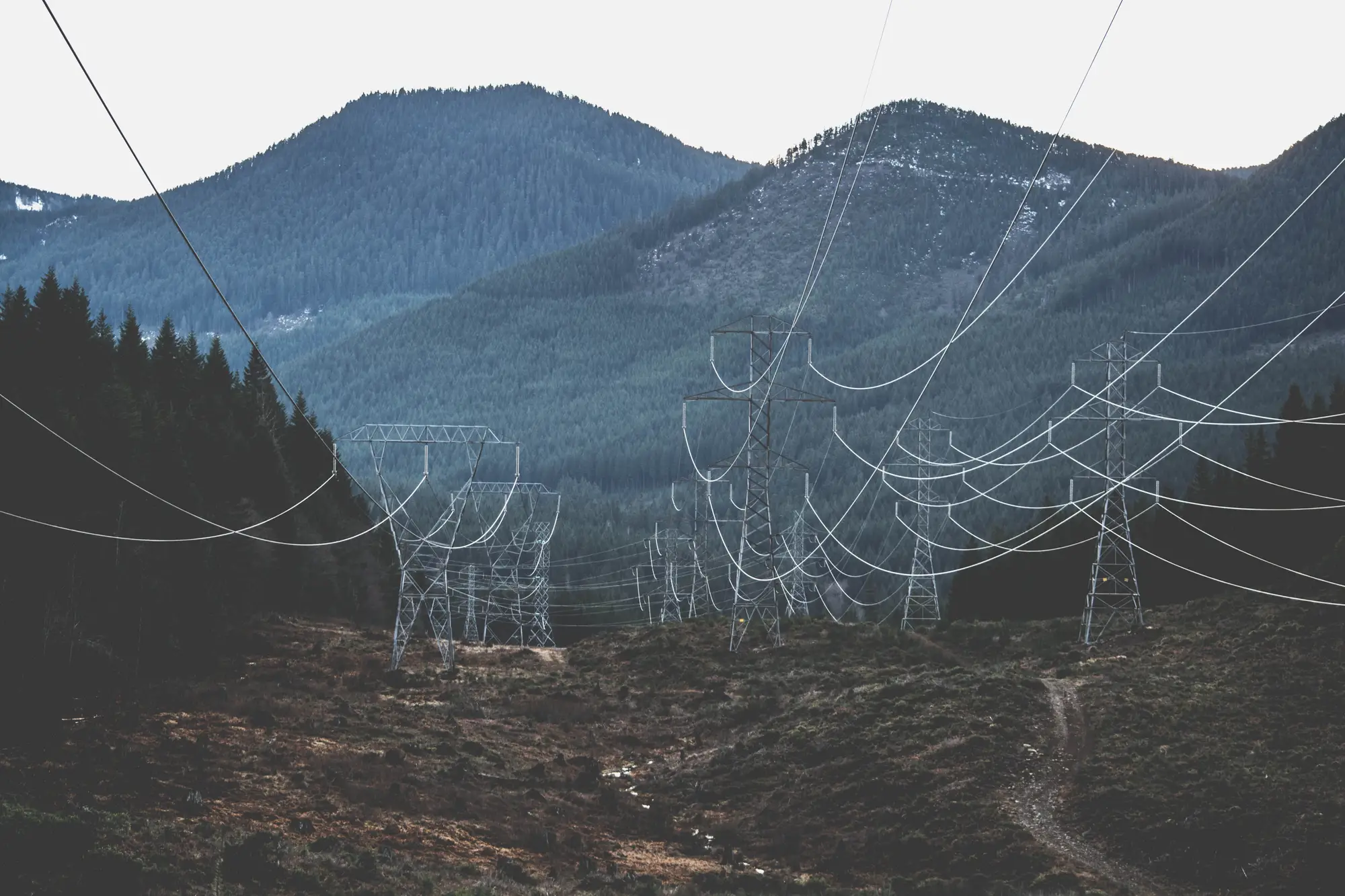
An escarpment and a ridge don't behave the same way in flow, even when the elevation change looks similar on a contour map. The difference changes where the speed-up is usable and where it's just turbulence waiting to eat your P90.
Escarpments: one steep face, long speed-up, nasty lee
An escarpment is asymmetric by definition. One side rises sharply, often over a short horizontal distance, then the terrain levels off or rolls gently away on top. Air hitting the steep face gets compressed vertically and accelerates as it's forced up and over, the classic orographic speed-up effect. On the upwind approach, if you've got decent fetch across flat or gently rolling ground, that speed-up can extend a useful distance back from the crest, not just at the lip.
The catch is the far side. Step past the crest and the ground often doesn't fall away at a matching angle. You get a flow separation zone: the boundary layer detaches from the surface, and what's underneath is recirculating, low-mean-speed, high-turbulence air. Depending on the steepness and the plateau geometry behind the crest, that separation bubble can extend hundreds of meters downwind before the flow reattaches. A mast sited just past the edge of an escarpment crest, chasing the speed-up number, can end up sampling the top of that bubble instead of clean accelerated flow, and the turbulence intensity readings will tell on it.
Ridges: speed-up on both flanks, separation wherever the lee happens to be
A ridge is closer to symmetric, at least in cross-section. Wind from either direction sees roughly the same slope angle climbing to the crest, so the ridge crest speed-up effect shows up on whichever side is currently upwind. That's the appeal: a well-shaped ridge can deliver speed-up across a wider range of prevailing directions than an escarpment, which only works when the wind is hitting its steep face.
The tradeoff is that ridges flip their lee side with the wind rose. Whatever flank isn't facing the wind today is in some degree of separation or wake, and if your site has two or three dominant direction sectors, you're dealing with flow separation on different flanks in different conditions rather than one known problem area. Narrow, sharply peaked ridges separate more readily than broad, rounded ones. A gentle rounded ridge crest might keep attached flow most of the way over, while a knife-edge ridge separates almost immediately past the top regardless of direction.
Where turbulence intensity bites
Speed-up numbers get the attention because they drive the energy estimate, but turbulence intensity is what drives loads and, honestly, what tells you whether a candidate position is real or an artifact of terrain you haven't walked yet. High turbulence intensity close to a crest on an escarpment usually means you're catching separated or transitional flow, not clean orographic acceleration. On a ridge, turbulence tends to spike right at the crest itself from the sharp curvature in the flow, then settle as you move back from the edge on the lee side, assuming the flow has reattached by then.
The practical upshot: a crest-top measurement that looks great on mean wind speed and ugly on turbulence intensity is telling you something about separation, not giving you two independent facts to average.
Reading it from a desk before you drive out
None of this requires a site visit to start screening. Slope, aspect, and obstacle height along a ridgeline are all things you can pull from stereo imagery before a crew ever walks the fence line, which is roughly the job we built a terrain screen for wind developers around: rule out the segments where the geometry says separation, so the crew only walks ridgelines worth putting a met mast on.
If you're still marking up contour lines by hand to guess where a crest holds clean flow, it's worth seeing what a desk screen catches first.